Installation Essentials & Truck Stock
As Canada’s go-to source for professional **Installation Essentials**, Simply Controlled helps professional...
As Canada’s go-to source for professional **Installation Essentials**, Simply Controlled helps professional...
$0.00 CAD
Lighting
Specification GradeTangra by LotusHigh-CRI specification lighting for design-sensitive projects.Explore Tangra → View all Lighting →Networking & Infrastructure
View all Networking & Infrastructure →Outdoor Heating
Building Protection & Specialty
Lighting & Control
Audio
Security & Access
Networking & Infrastructure
Have a BOM, SKU list, or project requirements? Start here.
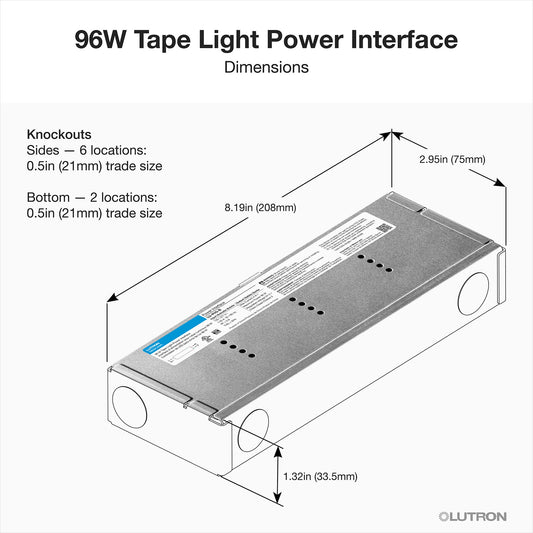
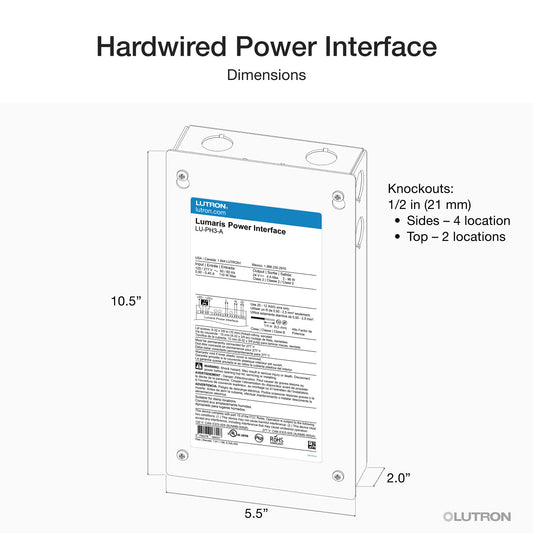
Source Lutron Lumaris power supplies and hardwired power interfaces through Simply Controlled for professional tape-light, RadioRA 3, HomeWorks, millwork, cove, under-cabinet, shelf, toe-kick, vanity, media room, theatre, and architectural lighting-control projects. This collection gives Canadian B2B dealers a focused ordering path for the power components needed to support Lumaris tape-light controllers and tape-light runs.
Use this page when planning how Lumaris tape light will be powered on the jobsite. The correct power supply or interface depends on the tape-light type, wireless controller, system family, number of zones, tape length, wiring path, service access, and whether the installation is better served by a local plug-in supply or a centralized hardwired power interface.
Lumaris tape-light systems are built around three core elements: the tape light, the wireless controller, and the power supply or power interface. Dealers should plan those components together before ordering so the job cart matches the room layout, controller count, tape length, and installation conditions.
Lumaris power planning is not just a checkout detail. The selected power supply or interface affects installation layout, service access, wiring method, controller placement, tape-light limits, and long-term reliability. Choosing the wrong power path can create avoidable jobsite revisions, missing adapters, poor service access, or mismatched controller layouts.
Before ordering, confirm the Lumaris tape-light type, compatible wireless controller, system family, number of controllers, tape length per controller, total tape length, plug-in versus hardwired power requirement, input voltage, available receptacles, wiring distance, service-access plan, and whether barrel-to-terminal adapters or other wiring accessories are required.
For simple single-controller layouts, a plug-in supply may be the cleanest option when a receptacle is available and accessible. For larger layouts, millwork-heavy installations, or projects where visible supplies are not acceptable, a hardwired power interface may provide a cleaner professional path.
Do not use power supplies or interfaces as a way to exceed approved Lumaris controller or tape-light limits. Plan the installation around the controller specifications, tape-light limits, power-interface capacity, required adapters, wiring method, and Lutron system design.
Similar-looking Lumaris power products can differ by input voltage, output capacity, wiring method, controller count, included adapters, physical form factor, and intended installation path. Use the full Lutron model number whenever possible when matching an existing job, preparing a service order, or building a project cart.
Simply Controlled supports Canadian B2B dealers sourcing Lutron Lumaris tape light, wireless controllers, plug-in power supplies, hardwired power interfaces, wiring accessories, connectors, adapters, and project materials. Dealer account holders can log in to view pricing, build job carts, and source Lumaris power components for professional lighting-control installations.
Need help selecting the correct Lumaris power path? Contact the Simply Controlled team with the system family, tape-light type, controller count, tape lengths, power location, wiring plan, adapter requirements, and project application, and we can help point you toward the correct ordering path.